The Actual Enemy
Against Death

“I cannot wait to celebrate when IT happens”
I’ve seen this talk before too many times about people of whatever persuasion. Of late against Donald Trump. The “IT” being death. But it was said of Obama, even with pastors quoting scripture about death.
But to speak so is to become a friend of death.
And death is the enemy.
This is our central tension: that we have centered people as the harbingers or agents of death because of our understandings of what they are accomplishing in the world. How many celebrated when Luigi Mangione murdered the CEO of UHC. They’ve given over $1.5 million to his legal defense fund. There are hashtags. There are:
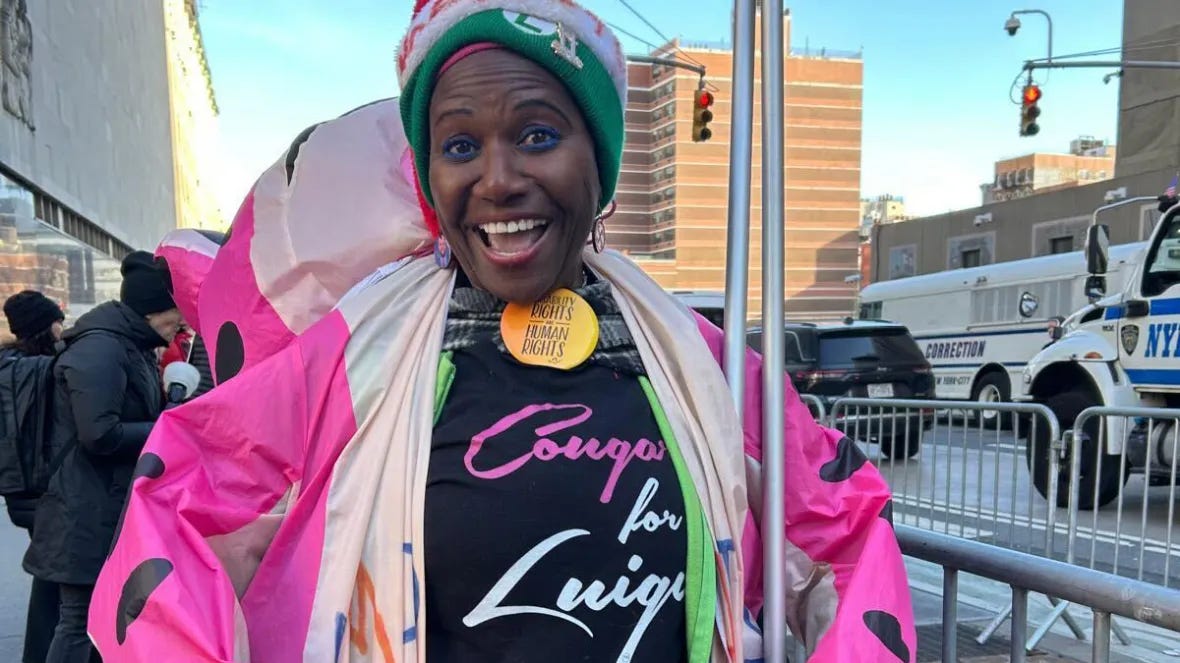
Celebrating death seems to be a theme. The idea is that someone is getting their “just desserts” or “just rewards.” As though their death is some grant cosmic reckoning for what they have done in life.
But what punishment is death when it is the only assured ending for all?
What triumph is there in the inevitable?
Acclimating to and embracing death as an outcome is adopting despair as a life motif. It is the most nihilistic of paths, one that damns us all.
I was reminded of this starkly this early morning as news broke of Greg Locke’s son dying of an overdose.
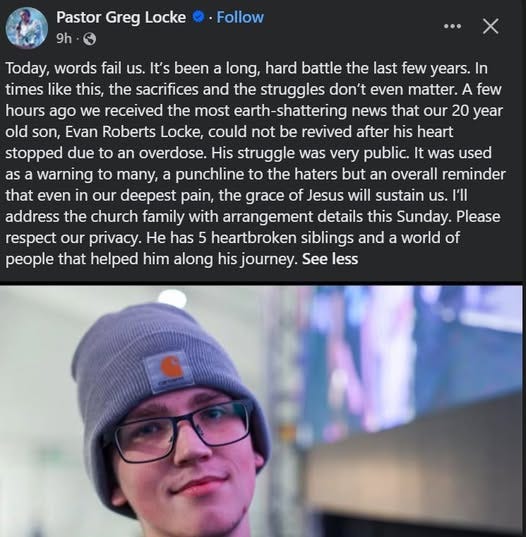
Locke is a monstrous voice. He is manipulative and uses his ‘pulpit’ to spread lies. But anyone who would triumph over this death - and there are those who will be happy - because it hurts Greg Locke are themselves already worse off and more acclimated to evil than Locke himself. They are worse than the monsters they would purport to combat through their politics or activism. They are friends of death.
Death, you see, is the master and friend of all suffering. Climate activism, pro-life movements, healthcare reform, anti-drug interdiction,s you name it are, at their core, a defense of life against the encroachment of death. The root of all our most fundamental political and social movements is a rally against death. It is a fear of death, even, because each of these social ills brings with it a reminder of that inevitable conclusion for each of us.
Would that we would see this common enemy at the root of all our suffering and refuse to even attempt to defeat evil with the root of evil. Instead, we adopt the spirit of Paul in his rage against the early Christians:
breathing out threatenings and slaughter
We the enraged imagine in our righteous fury that if we had all the power in the world that our reigns of terror would only end in the deaths of the actually unrighteous. We would be just. In our hearts we take on the attitude of every great monster who assumed by killing enough people they would rid the world of unrighteousness.
Did it ever work for these people? The Terror. The Troubles. The Khmer Rouge. The Inquisitions. The Crusades.
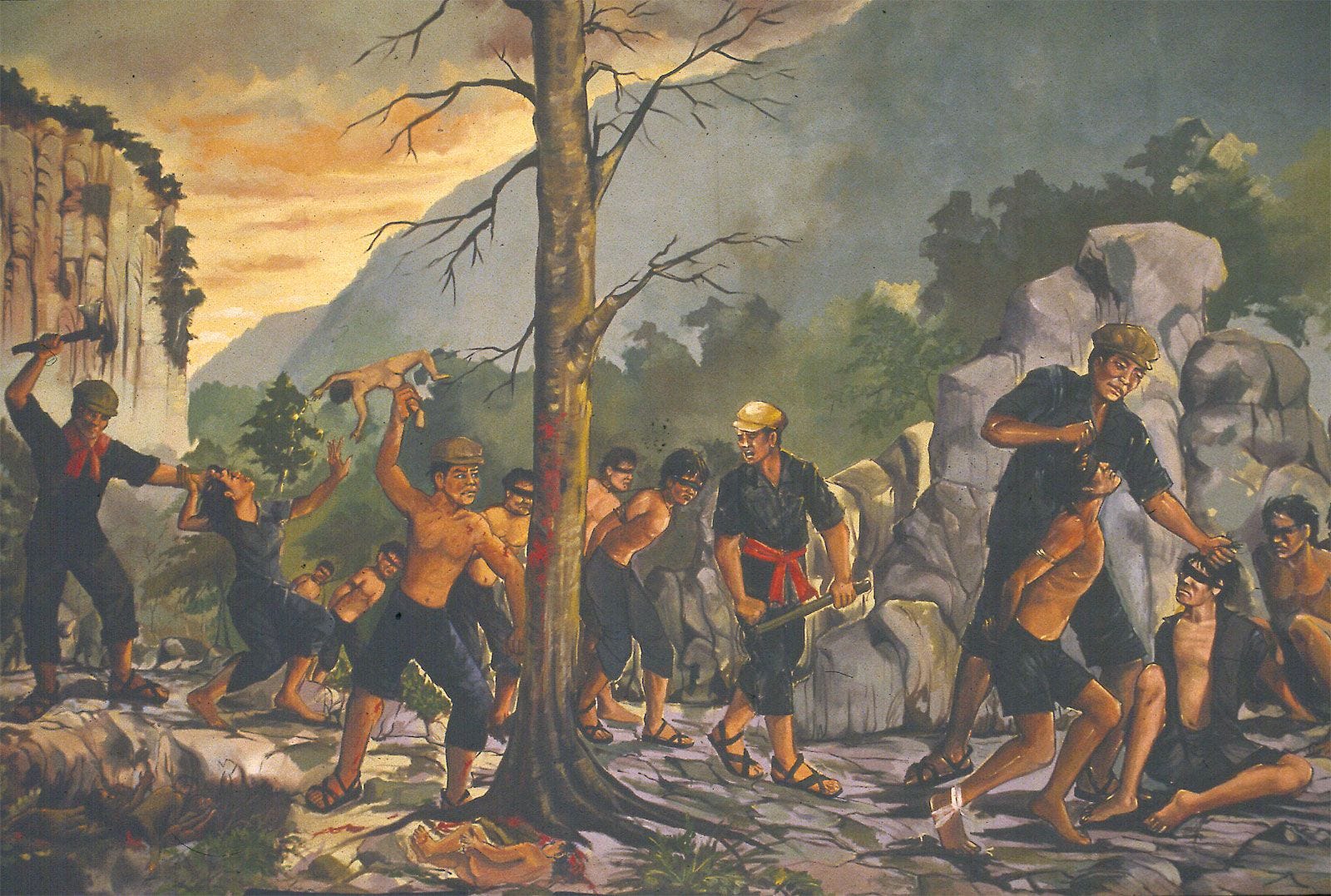
No. It never does.
I mean these people somehow delude themselves into thinking it might.
But, we think in our moral righteousness and our addictions to seeing others suffer…. it might work for us.
The sting of death is sin, and the power of sin is the law.
The sting is the poison, the venom, the pain. So what is sin, after all?
I love the title of Plantiga’s book about sin: “Not the Way It’s Supposed to Be.”
Sin is “the destruction of shalom, the peace and harmony and blessedness God intended for creation.” Sin is not the violation of an arbitrary collection of rules but a complete disruption of life and goodness and peace. Sin is comprehensive, consuming. It is the sting of death because it injects into each of us a living death, a pain that constantly consumes us all that the world is not where it should be. That we are not who we ought to be. That something - everything - is broken.
This is the “power of sin:” the law. The law merely shows us this decay. None of us follow it to perfection, and even if we do we are not living a peaceful life but an entombed, jailed life of moral perfectionism. This is not life abundant but life constrained by fear. It is close to death, a life lived by law.
No, the law is merely a tool to show sin.
Positing peace as the opposite of sin helps us see death in a new way, because death itself was Not the Way It’s Supposed to Be. Death may seem peaceful, but it is nothing more than the total disruption and violence against the way a living thing operates. “Sin leads to death,” Paul wrote in Romans. The “wages of sin is death.” Death is not good, even if it is natural and inevitable.
(Some weird assumptions have made their way around that death could be a good thing, that a peaceful death was part of God’s creation, that we are intended from the start to be interrupted in such a way. But find a peaceful death? Even in hospice, drugged up, the body rages against the end on a cellular level. The organs fight. The pain can be immense, demanding heavy drug interventions. The body does not want to end.)
How could anyone partner with death against death then? To do so is simply to embrace sin, to engage with more ruination of the world. The Good News we ought to hold is that death itself is dead:
I will deliver this people from the power of the grave;
I will redeem them from death.
Where, O death, are your plagues?
Where, O grave, is your destruction?
This, then we preach: death is dead.
To go from that message to one calling for death, relishing death, embracing death… it makes no sense at all.
🔥 🔥 in tears, brother. Thank you for this. I get the sense this kind of clarity is costly. Seeing things clearly, the way scripture would have us see them is a bittersweet kind of joy. Sweet to the taste, but unsettling. Thank you for taking the time to write. I've missed this "Ben Marsh".